
Editor’s Note: With the rapid rise of AI coding agents, the “death of coding” narrative has resurfaced. Here is a realistic look at where the industry stands in 2026.
For the last few years, headlines have relentlessly predicted the end of the programmer. As AI tools became capable of writing working code, fixing bugs, and even passing technical interviews, the search trend “computer science dead in 2026” spiked globally. Students started questioning their degree choices. Professionals worried their skills would become irrelevant overnight.
But the reality of the computer science dead 2026 debate looks very different on the ground.
Computer science hasn’t disappeared—it has moved up the stack. Just as compilers once removed the need to write assembly language by hand, AI is now reducing the need to manually type syntax. What remains are the problems automation still cannot solve.

Much of the panic comes from confusing two different things: coding and computer science. Coding is the act of writing instructions. Computer science is the study of computation, systems, and logic. Coding is becoming cheaper. Computer science is becoming more important.
From Writing Code to Judging AI Output
The biggest change in software work today isn’t speed—it’s responsibility.
In the past, we spent most of our time writing code line by line. Today, much of that construction work is handled by AI tools like GitHub Copilot. An engineer now prompts a system, reviews what it produces, and decides whether the result is acceptable.
AI can generate an implementation very quickly, but it lacks context. It doesn’t understand why a system exists, who the users are, or which trade-offs matter most. It doesn’t know about legal restrictions, business priorities, or long-term maintenance costs.
That responsibility stays with us. Engineers define the goals, constraints, and edge cases. AI fills in the implementation details. If the intent is wrong, the AI will simply produce the wrong result faster.
The “Computer Science Dead in 2026” Reviewer Bottleneck
As code generation becomes effortless, verification becomes the real bottleneck. This explains why the computer science dead 2026 narrative is misleading: the work hasn’t vanished, it has just shifted to verification.
One person can now generate thousands of lines of code in minutes. But volume does not equal correctness. Every line still needs to be validated against system requirements, security constraints, and real-world behavior.
In this environment, the ability to read, understand, and debug code is often more valuable than the ability to write it from scratch. Engineers must look beyond clean syntax to spot deeper problems—logic errors, race conditions, performance issues, or security flaws that AI might miss.
This shift also changes what entry-level competence looks like. Simple demo projects no longer stand out because they can be generated automatically. Employers look instead for evidence of system-level thinking: can you explain why a design choice was made, how it fails, and how you would fix it?
What AI Is Good At — and Where It Breaks Down
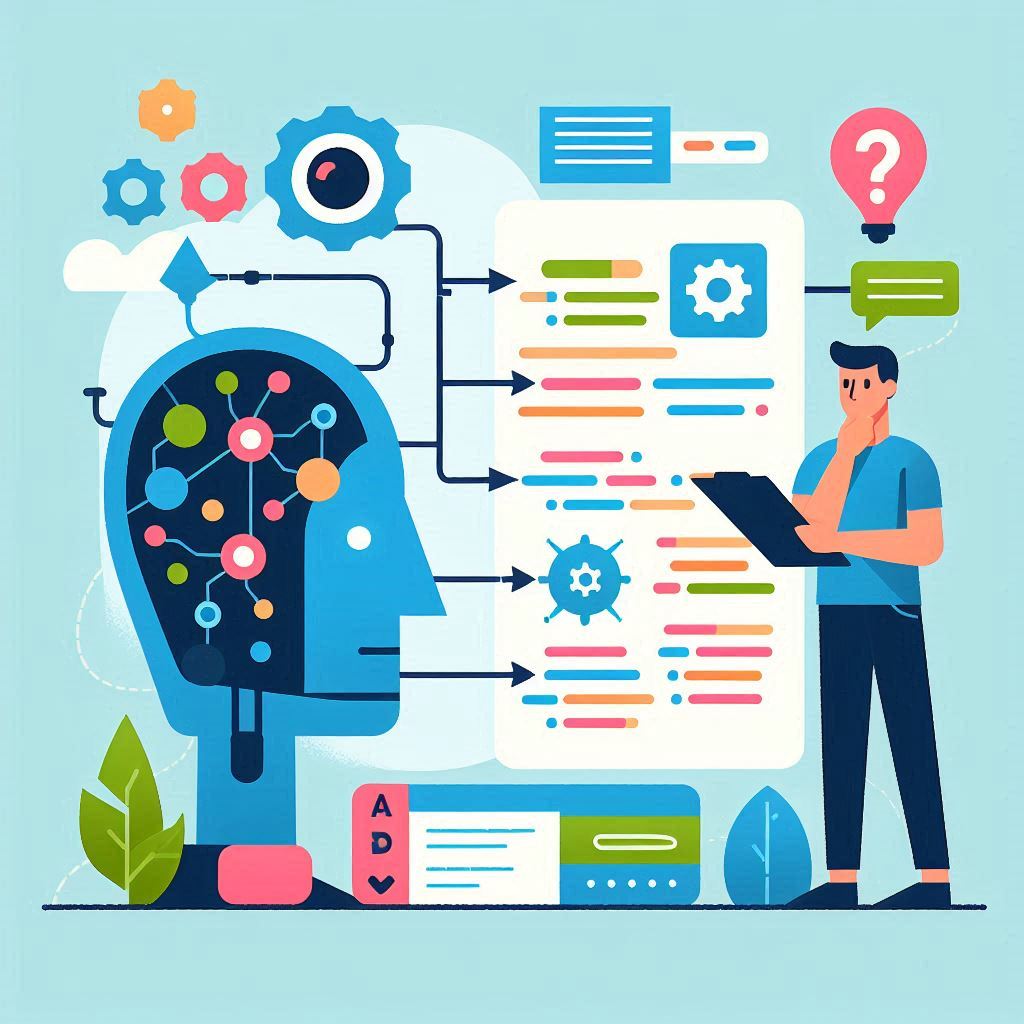
To understand why computer science still matters, it helps to look at how AI coding tools actually work.
These systems are probabilistic. They predict the next token based on patterns learned from large amounts of data. They are very good at mimicking structure and style, but they do not reason in the way humans do.
Software systems, however, are deterministic. A payment system must always calculate the correct amount. Medical software must handle data securely every time. Infrastructure systems must behave predictably under stress.
When probabilistic tools are used without strong oversight, small mistakes can have large consequences. An AI may choose a solution that “usually works” but fails in rare conditions. Those rare conditions are often the ones that cause outages, data leaks, or financial loss.
This is where computer science fundamentals apply. Humans enforce correctness. AI proposes answers; people decide whether those answers are safe.
Why Real-World Systems Still Need Humans
AI tools tend to perform best in clean, well-documented environments. Real-world systems are rarely clean.
Production systems often involve legacy code, undocumented behavior, partial migrations, and historical decisions that no longer make sense but still matter. These details are difficult for AI to infer, especially when they are not written down anywhere.
AI also struggles with “last-mile” problems. It can get a solution 80–90% correct very quickly, but the final 10–20%—integration, performance tuning, and handling rare edge cases—still requires human intervention.
Another issue is silent failure. AI-generated code may run without errors while still being logically wrong. For example, it may use an outdated API, mishandle permissions, or introduce subtle security vulnerabilities that only appear under specific conditions.
The Architect vs. the Bricklayer: A New Role
A helpful way to understand this shift is the difference between an architect and a bricklayer.
For many years, software engineers had to be both. We designed systems and manually wrote every piece of code. AI has now taken over much of the bricklaying. It handles repetitive tasks, boilerplate, and scaffolding at high speed.
But AI doesn’t know whether the foundation is stable. Humans remain the architects. We decide how systems are structured, how they fail, and how they recover.
Where AI Coding Tools Still Fall Short
Despite rapid progress, AI coding tools are not a complete solution.
- Context: Even with large context windows, AI cannot fully internalize the history, intent, and unwritten rules of complex systems.
- Declining Quality: As more AI-generated code appears online, future models may train on synthetic data.
- Security: AI tends to suggest common solutions, not necessarily secure ones.
Conclusion
Is computer science dead 2026? No. It has simply evolved.
The field has shed repetitive, mechanical work to focus on its core purpose: reasoning about complex systems. Success is no longer measured by how fast you can type code, but by how well you design, verify, and secure the software that runs the world.
We have moved from being creators of text to curators of logic. That shift doesn’t diminish the profession—it strengthens it.
At Genzverse, we focus on explaining how technology actually works beyond hype, which is also reflected in our approach to building long-term engineering skills.
You can explore more in-depth technology explainers on the Genzverse homepage.
Table of Contents
Frequently Asked Questions
Will AI replace software engineers completely? No. AI automates code generation, not system-level reasoning, accountability, or design decisions.
Is a Computer Science degree still worth it in 2026? Yes, if it emphasizes fundamentals like algorithms, architecture, and systems rather than just tools.
What is the “computer science dead 2026” trend? It refers to the debate over whether AI will replace human programmers. The consensus is that coding is changing, not dying.
Does AI-generated code have more bugs? It can. AI code often looks correct but may hide logic or security flaws.
Pingback: Software Engineering in 2026: Why the Engineer Role Is Stronger Than Ever