
On February 28, 2026, the geopolitical landscape of the Middle East shifted fundamentally. Coordinated strikes targeted high-level military hubs in Tehran, and shortly after, state media confirmed the deaths of senior leaders, including Supreme Leader Ayatollah Ali Khamenei.
The 2026 Tehran strikes were not just another episode in the region’s long-running shadow confrontation. They disrupted the core leadership structure of the Iranian state. For decades, tensions followed a recognizable pattern of calibrated escalation and controlled retaliation. That structure has now been altered.
The immediate consequence of the 2026 Tehran strikes is not full-scale war, but a leadership vacuum that changes the strategic calculations of every regional and global actor.
If you want a full background on how tensions between Iran and the United States evolved over decades — including key conflicts, diplomatic clashes, and turning points — click here to read the complete history of the Iran-America conflict.
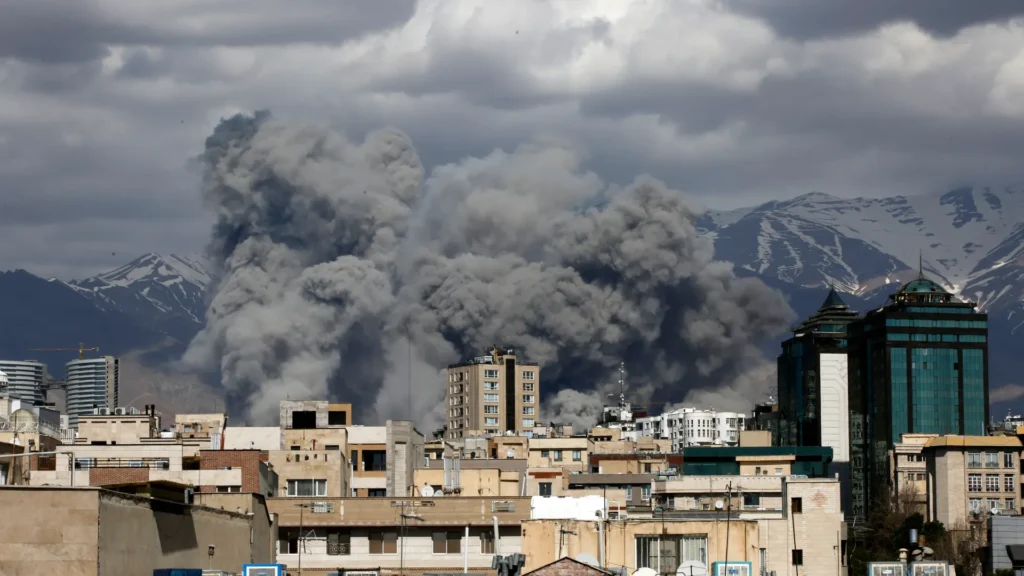
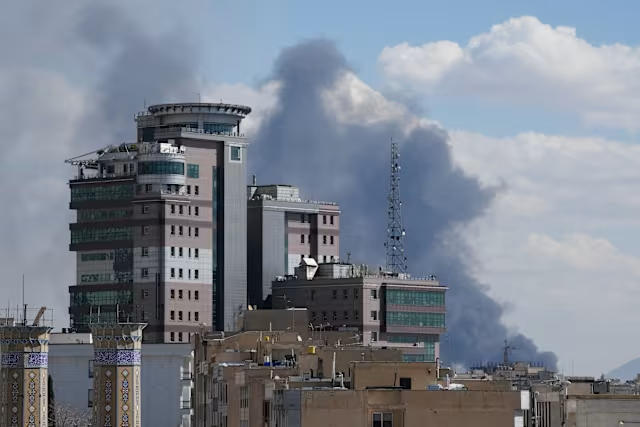
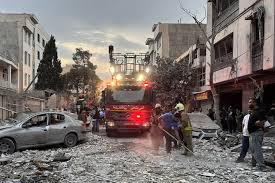
How the 2026 Tehran Strikes Changed the Rules of Conflict
Before February 2026, escalation management defined the regional security environment. Even during high-tension episodes, informal communication channels and understood red lines limited direct confrontation.
The 2026 Tehran strikes shifted that framework. While Iran’s missiles and drone capabilities remain intact, its centralized command hierarchy has been weakened. Hardware can be replaced. Institutional authority cannot be restored overnight.
The region has moved from predictable deterrence toward fragmented authority. In such environments, the greatest danger is not deliberate invasion but miscalculation by actors operating without clear coordination.
What Happens When Leadership Suddenly Disappears?
Iran’s political system is built around centralized authority. The Supreme Leader traditionally balances competing institutions, including the clerical establishment, the regular armed forces (Artesh), and the Islamic Revolutionary Guard Corps (IRGC).
Under Article 111 of the Iranian Constitution, a provisional council assumes interim responsibilities. However, this mechanism was designed for orderly transition, not crisis during active geopolitical confrontation following the 2026 Tehran strikes.
When authority is removed at the top of a centralized system, power diffuses horizontally. Different institutions may act independently to preserve influence. This increases the probability of parallel decision-making and accidental escalation.
The IRGC’s Expanding Role After the 2026 Tehran Strikes
Following the 2026 Tehran strikes, the IRGC has emerged as the most influential operational actor inside Iran.
The IRGC functions simultaneously as a military force, intelligence organization, and economic network. Its immediate priority is institutional survival and deterrence credibility.
To project strength, the IRGC may rely on:
Indirect pressure:
Instead of launching a large, direct military attack, Iran can respond in smaller and less obvious ways. This may include working with allied groups in the region to create tension in different places at the same time. Small drone attacks, limited strikes, or harassment at sea can increase pressure without starting a full-scale war.
Missile preparedness:
Keeping missile systems ready to launch sends a clear message. It shows Iran is prepared to respond immediately if more strikes happen. Even if no missiles are fired, staying on high alert acts as a warning and discourages further attacks.
Control over key shipping routes:
Iran is located near one of the world’s most important oil transit routes, the Strait of Hormuz. By increasing patrols or creating uncertainty in that area, it can affect global oil prices and shipping costs. This creates economic pressure on countries that rely heavily on stable energy supplies
The Strait of Hormuz After the 2026 Tehran Strikes
The Strait of Hormuz remains Iran’s most powerful strategic lever. According to international energy data from the International Energy Agency (IEA), roughly 20% of global oil consumption and a significant portion of liquefied natural gas transit this narrow corridor.
A full blockade would damage global markets and Iran’s own economic relationships. However, disruption does not require closure. Increased naval patrols, limited vessel seizures, or elevated maritime risk can significantly affect insurance premiums and shipping flows.
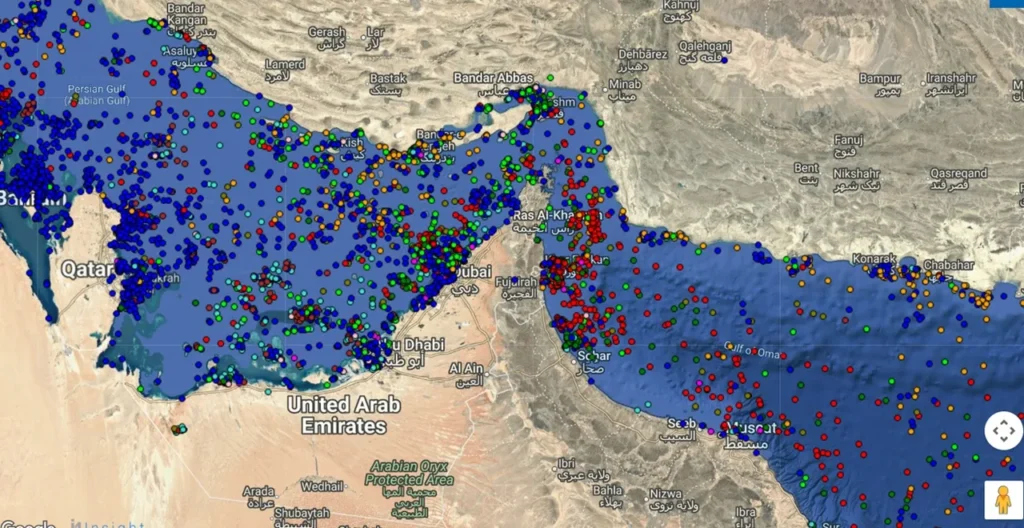
Energy markets often respond to perceived instability as quickly as to actual disruption. Even without physical closure, the Strait of Hormuz becomes an economic pressure mechanism following the 2026 Tehran strikes.
The Gulf Security Dilemma
Gulf Cooperation Council (GCC) states face a complex position in the aftermath of the 2026 Tehran strikes.
Several host U.S. military installations. Iran views these facilities as enabling infrastructure. This increases their exposure to retaliation.
At the same time, Gulf economies depend on stability to sustain tourism, logistics, and investment flows. Any prolonged instability erodes investor confidence.
These states must balance:
- Security cooperation with Western partners
- Regional economic integration
- Avoidance of direct military escalation
Their strategic objective is deterrence without becoming primary battlegrounds.
Why Cyberattacks Matter After the 2026 Tehran Strikes
While maritime risk draws attention, cyber escalation may carry equal significance. Iran has invested heavily in cyber capabilities as a cost-efficient means of strategic signaling.
In periods of leadership transition, cyber units may operate with greater autonomy. Potential targets include:
- Energy grid supervisory systems
- Desalination facilities
- Financial clearing networks
Cyber operations provide plausible deniability and can create economic disruption without conventional military engagement.
Cyber attacks are harder to trace and can damage important systems without firing a single missile. As we discussed in our breakdown of How Software Engineering Changed in 2026, modern infrastructure now depends heavily on software systems, which makes digital attacks just as powerful as physical ones.
What Could Happen Next? Three Risk Paths
The trajectory following the 2026 Tehran strikes can be framed in three structured scenarios.
1. Controlled Consolidation
The provisional leadership consolidates authority and appoints a successor aligned with key institutions. Escalation stabilizes into a tense but managed deterrence posture.
2. Sustained Asymmetric Pressure
Leadership remains contested. The IRGC relies on maritime interference and cyber operations to impose economic cost while avoiding conventional war.
3. Fragmented Escalation
Internal divisions deepen. Independent actions by regional commanders increase unpredictability and escalation risk.
Final Assessment
The 2026 Tehran strikes did not produce immediate regime collapse, nor have they triggered full-scale war. Instead, they introduced structured uncertainty into an already volatile region.
The central question is whether internal authority in Tehran can be consolidated quickly enough to restore escalation discipline. Stability will depend less on rhetoric and more on institutional cohesion and calculated deterrence.
The shape of Middle East security has changed. The consequences of the 2026 Tehran strikes will unfold not in dramatic headlines, but in the gradual recalibration of power and risk across the region.
Table of Contents
Frequently Asked Questions
Is global oil supply currently at risk?
There has been no total shutdown. However, increased activity in the Strait of Hormuz can raise energy prices and shipping insurance costs.
Who governs Iran now?
A constitutional transitional council manages interim authority, though operational influence is currently concentrated within the IRGC following the 2026 Tehran strikes.
Will this lead to regional war?
Most regional actors have strong incentives to avoid large-scale war. The primary risk lies in miscalculation rather than deliberate expansion.